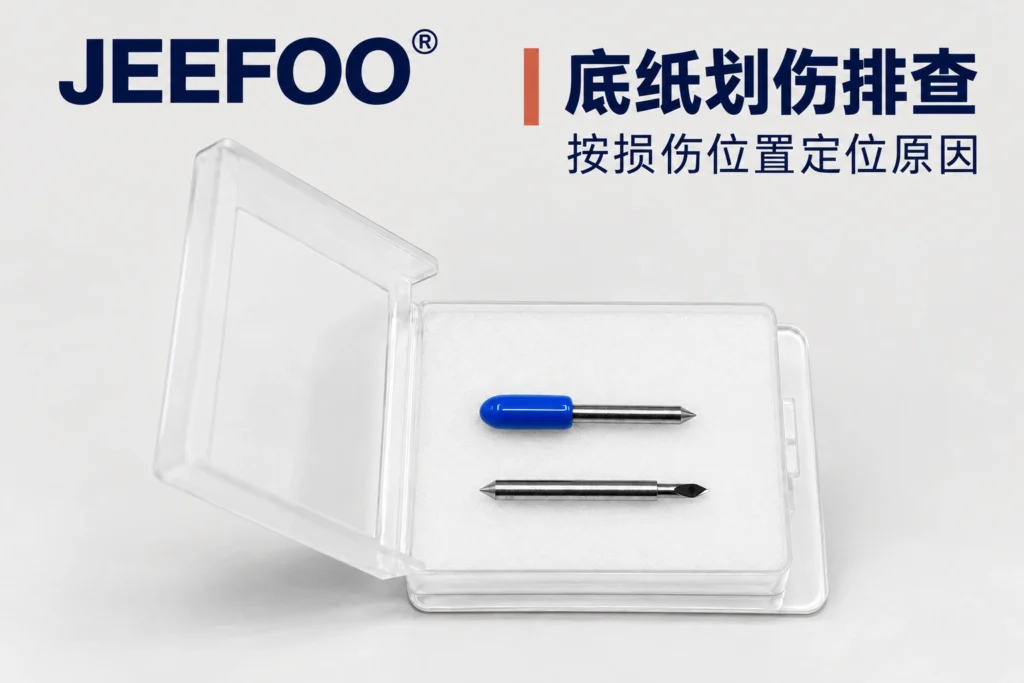
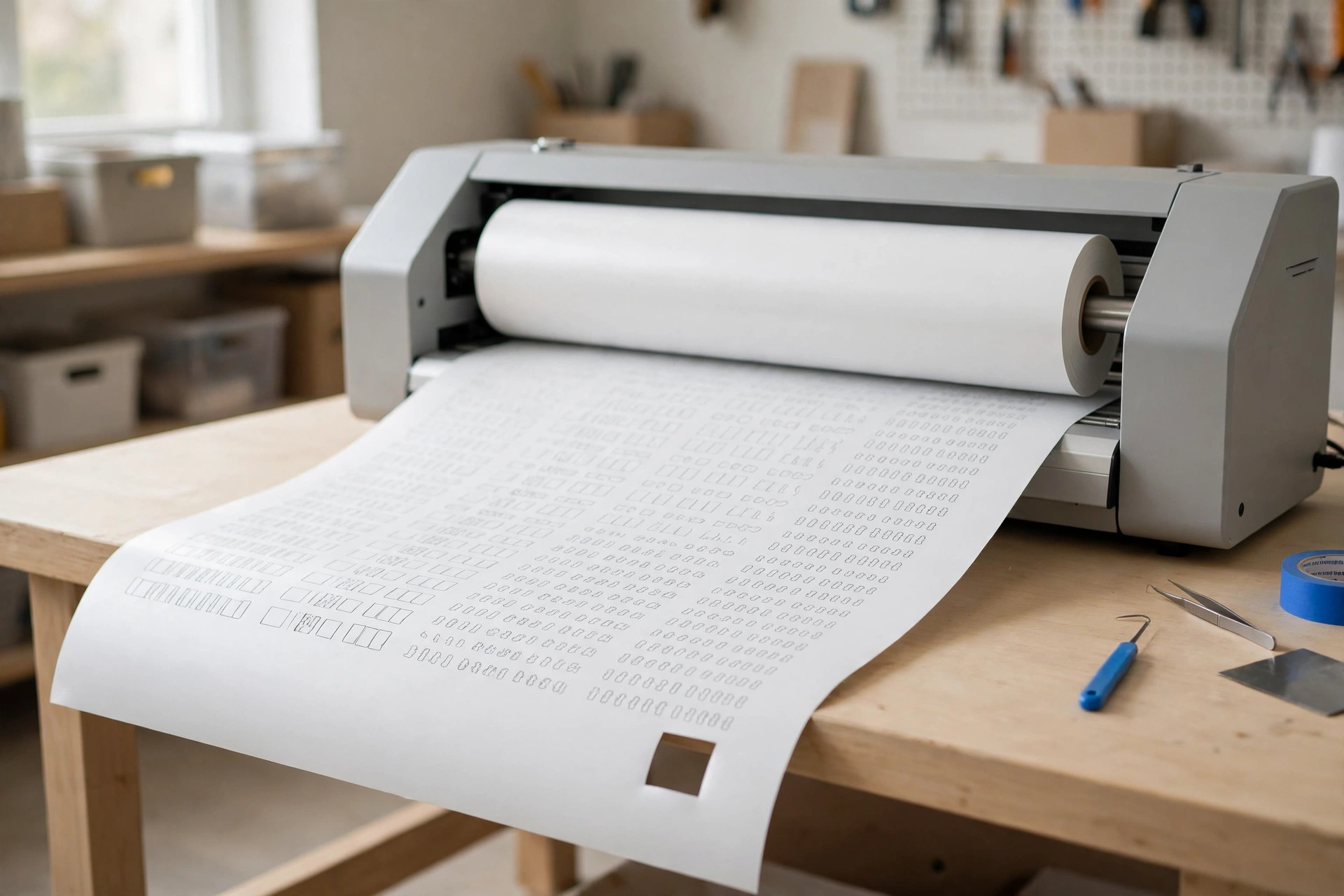
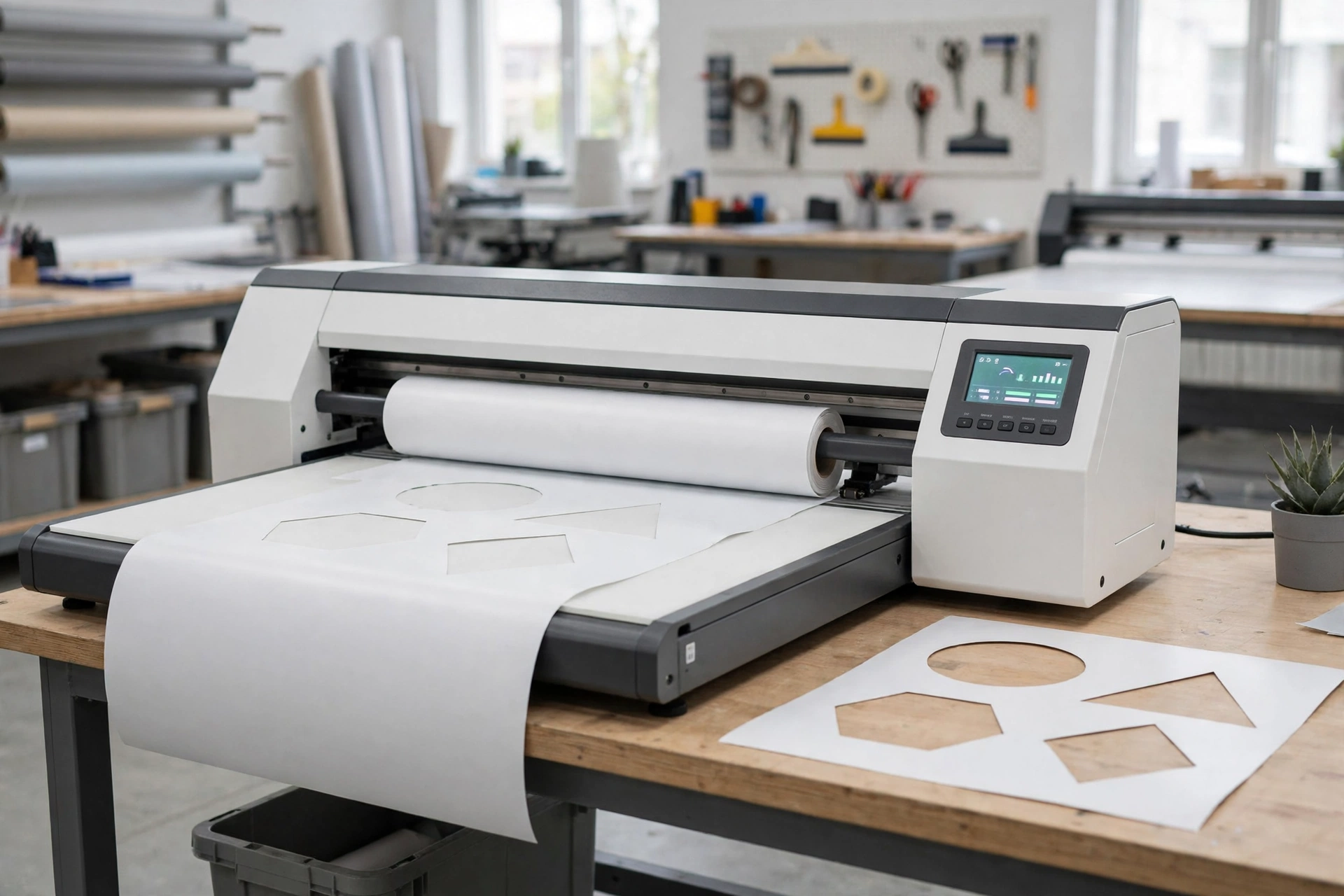
刻字刀划伤底纸时,先区分轻微压痕、明显深沟和已经切穿。对于需要保留离型底纸的半切任务,合格标准应由材料与后续加工要求确定。若底纸破裂、排废时连带断开,继续加压通常不利于定位问题,应停下并保留异常小样。
1. 刻字刀划伤底纸:先看损伤分布在哪里
把异常图形从底纸背面与正面分别观察,标出损伤是沿整条轮廓出现,还是集中在拐角、起落刀或固定位置。连续深沟可优先检查外露量与压力;局部重复损伤则还需查看文件是否存在重叠路径或重复输出。若问题总出现在台面同一区域,可依设备维护说明检查承托面状态,不要立即把原因归到某一批刀片。
2. 重新检查刀尖外露量
换刀后仍保留旧刀的调节位置,可能让新刀伸出过多。按刀座说明缩短外露量,使其满足面材切割的实际需要,然后用同一材料小样检查。不要通过把刀尖大幅伸出来解决切不透,也不要在裸露刀尖附近直接用手试锋利度。外露量无法稳定、调节后自行变化时,应先排查刀座固定与调节机构。
3. 隔离压力与文件因素
确认外露状态后,再按设备允许的方式逐步调整压力,每次仅改变一个条件,保留上一张试样对照。MIMAKI的特定系列试切说明将压力过大、刀尖过度伸出列为底纸被切开的检查项;其他设备应查本机手册。若降低压力后某些区域仍被反复切深,同时另一些区域未切透,需检查重复路径、材料不平或刀座状态,避免无方向地反复加减压力。
4. 用完整工序确认是否恢复
重新切出的样品应同时接受排废和揭取检查:面材能否完整分离,底纸是否仍有足够完整性,小字是否被带起。只看正面轮廓整齐,可能漏掉背面已受损的情况。若发现崩尖、刀具动作异常或承托部位损伤,按维护要求处理后再验证。将合格样与故障样并排保存,比单记一个压力值更有助于下次定位。
排查刻字刀划伤底纸,应从损伤位置开始,逐步分离外露量、压力与重复路径等因素。恢复生产的依据是半切与排废均符合要求,而不是底纸表面看起来没有痕迹。
常见问题
半切后底纸有轻微压痕,就一定不合格吗?
应区分轻微压痕、深沟与切穿,并按材料和后续加工要求验收。既要确认面材可分离,也要保留底纸所需的完整性。
底纸被切穿,是否先继续增加刀压?
先停止并保留小样,核对刀尖是否外露过多、压力是否过大,再检查重复路径、材料平整度及刀座。逐次只改一个条件,用同一材料对照。
可参考MIMAKI CG-AR官方试切说明中关于底纸被切开时的压力与外露量检查;具体菜单和数值不得直接套用于其他机型。
英文技术摘要 / English technical summary
When diagnosing liner scoring, distinguish a slight impression from a deep groove or a complete cut through the backing. The acceptance criteria depend on the material and the next production step. A clean outline on the face film does not prove that the backing remains suitable.
Inspect the front and back of the sample. Note whether the damage follows the complete contour, occurs at corners or start points, or repeats at a fixed machine location. Different distributions suggest different checks rather than one universal cause.
Check blade extension after a replacement. The adjustment left for a worn blade may expose a new tip too far. Follow the holder instructions and do not use excessive extension to solve incomplete cutting. If extension changes by itself, inspect the holder adjustment and retention.
Once extension is confirmed, adjust pressure using the machine instructions and change only one condition per trial. Also check duplicate paths, uneven material and the supporting surface where appropriate. Evaluate weeding and removal before returning to production. Keep both failed and accepted samples with their conditions so that the next operator can trace the diagnosis.