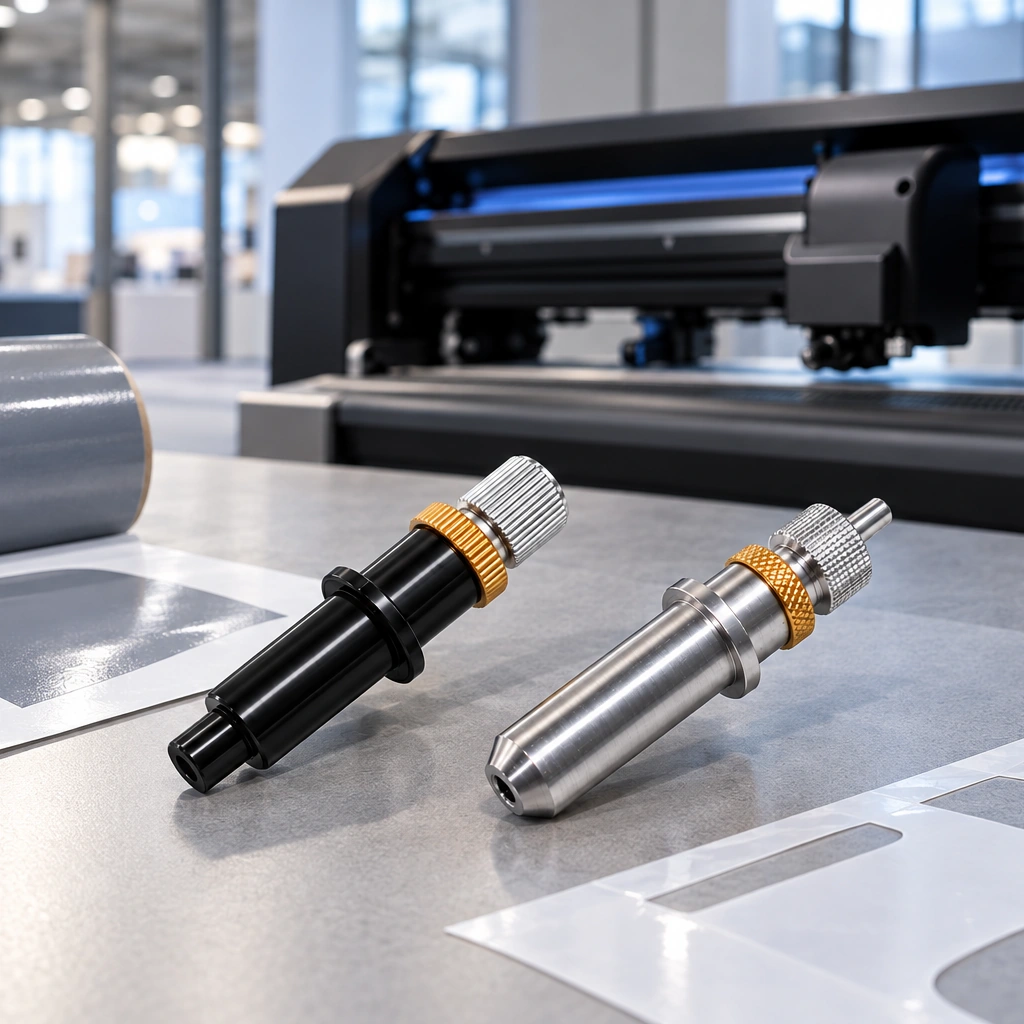
Mimaki 60度刻字机刀片适用于兼容的米马克刻字机、绘图切割机和乙烯基切割设备。60° 刀尖可为较厚、较硬或多层材料提供更深的有效切入,但必须与 2 毫米刀杆刀座、0.25 毫米偏心距以及设备参数正确匹配。本指南介绍规格、选型、装刀、压力设置与维护方法。JEEFOO 位于中国广州(Guangzhou, China),为国内外广告标识、标签和工业切割客户提供刀片供应与应用支持。
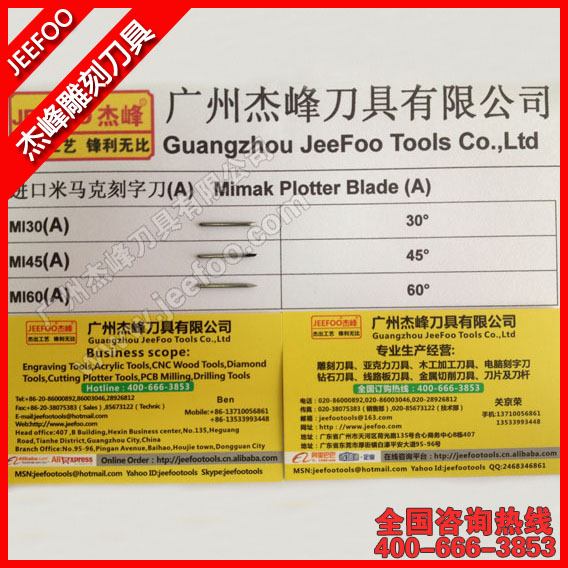
Mimaki 60度刻字机刀片快速参数
- 适用设备:兼容的 Mimaki 米马克刻字机与绘图切割机
- 刀尖角度:60°
- 最大材料厚度参考值:0.25 毫米
- 刀杆直径:2 毫米(约 0.08 英寸)
- 刀片总长:23 毫米(约 0.91 英寸)
- 偏心距:0.25 毫米
- 材质:89%–90% 碳化钨、10%–11% 钴硬质合金
- 洛氏硬度:约 91.5 HRA
- 抗断裂强度:约 4000–4200 N/mm²
- 常规包装:3 支 / 盒
1. 60° 刀尖适合哪些材料
60° 刀尖通常用于需要较深切入的反光膜、磨砂膜、厚乙烯基、热转印膜、模板材料或部分层压介质。它并不表示所有厚材料都可以直接切割,实际能力仍受材料硬度、设备切割力、刀座行程与切割垫条状态限制。普通薄不干胶若使用 60° 刀片,应控制刀尖伸出量和压力,避免切穿底纸。
2. 核对 2 毫米刀杆与刀座
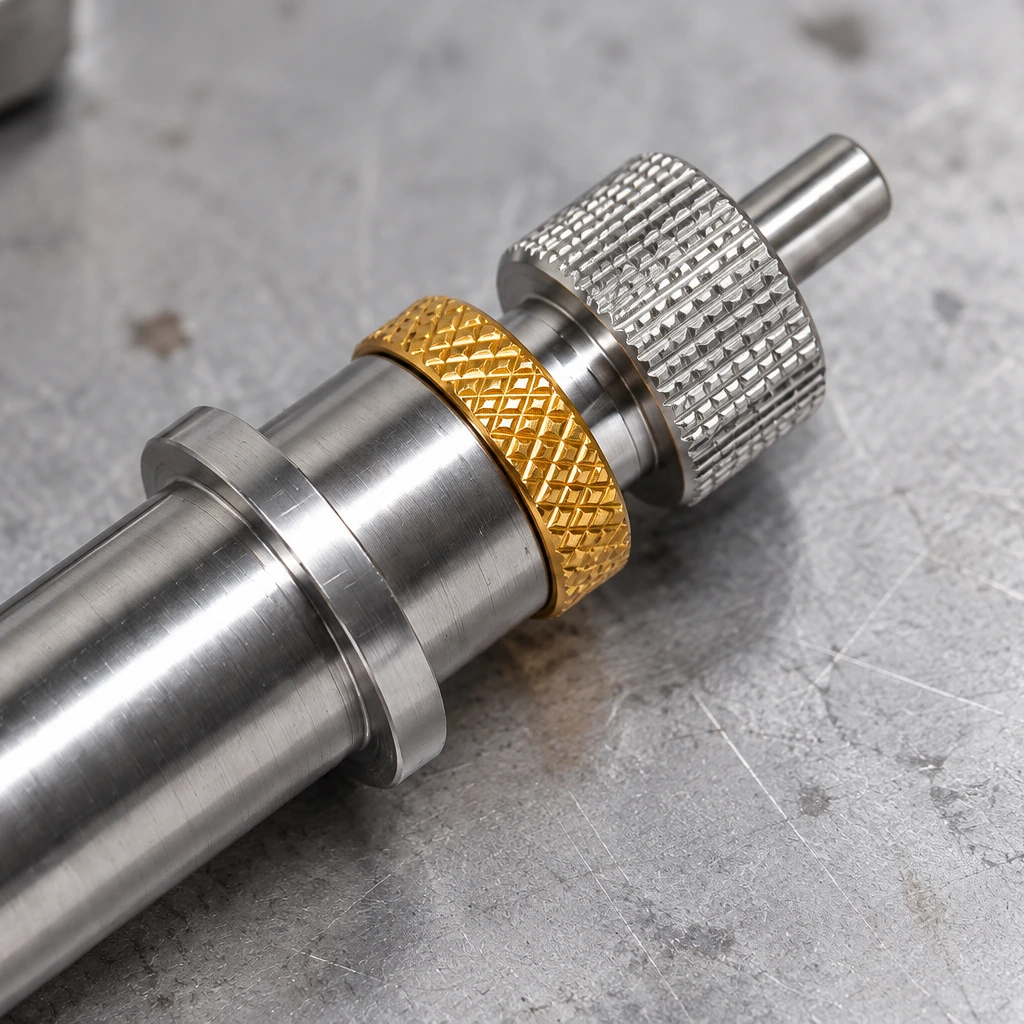
安装Mimaki 60度刻字机刀片前,应确认刀座孔径为 2 毫米、夹头无松动且旋转顺畅。不要把 1.5 毫米等不同柄径刀片装入 2 毫米刀座,也不要用过度锁紧补偿不匹配的尺寸。型号接近并不等于通用,下单时应提供设备品牌、具体机型、原刀片照片、刀杆尺寸和刀座型号。
3. 控制刀尖伸出量
先把刀尖缩回刀座,再逐步调出仅能切开面材的长度。用实际生产材料进行手工划切和设备测试,理想状态是面材完整分离,而底纸只留下浅痕。60° 刀尖若露出过长,会增加侧向摆动、断尖风险和材料拖拽;伸出不足则可能造成深层材料切不透或轮廓无法完整剥离。
4. 设置压力、速度与偏心
从低压力和中低速度开始,每次只调整一个参数。偏心补偿应参考 0.25 毫米规格并结合 Mimaki 设备与软件要求验证。测试图形应包括直线、圆形、尖角、小文字和闭合轮廓。若圆形无法闭合、转角出现钩形或细节被拉起,应检查偏心设置、速度、压力、刀尖磨损以及刀座是否旋转受阻。
5. 材料测试与参数记录
不同品牌或批次的反光膜、热转印膜和标签材料在涂层、胶黏剂、面材硬度及离型纸厚度上可能不同。生产前应使用同批材料测试,并记录刀尖角度、伸出量、压力、速度和偏心补偿。更换材料、刀座或切割垫条后重新确认参数,能减少废料和返工。
6. 硬质合金刀片维护
钨钴硬质合金具有良好的耐磨性和刃口保持能力,但仍应避免刀尖撞击金属、横向受力或跌落。定期清理刀座内的胶屑、纸屑和粉尘,检查刀片是否弯曲、刀座轴承是否顺畅。出现毛边、拉膜、深浅不一或异常噪声时,应同时检查刀片、刀座、压轮和切割垫条。
7. JEEFOO 广州供货与选型支持
JEEFOO 在中国广州(Guangzhou, China)供应Mimaki 60度刻字机刀片、米马克刀座及相关切割配件。询价时请提供设备型号、刀座照片、刀杆直径、目标材料、厚度、角度和数量,以便核对适配性。可继续查看 JEEFOO 米马克刻字刀片产品与 刀具应用文章;设备资料可参考 Mimaki 官方支持页面。
English Guide: Mimaki 60-Degree Plotter Blade
A Mimaki 60-degree plotter blade is intended for compatible cutting plotters and blade holders that accept a 2 mm shank. The steeper tip angle can maintain an effective cutting edge in thicker, tougher, textured, or laminated media, including selected reflective films, heat-transfer materials, stencil media, and heavy vinyl. It should not be chosen by angle alone. Machine model, holder bore, blade length, offset, material construction, available cutting force, and the condition of the cutting strip all affect performance.
Confirm the blade and holder dimensions
This specification uses a 2 mm diameter shank, a 23 mm total length, and a nominal 0.25 mm offset. Verify these dimensions against the original blade, holder documentation, and Mimaki equipment model before ordering. A blade with the wrong shank can be loose or impossible to install, while a different offset may create open circles, hooked line endings, or distorted corners. Photographing the original holder and measuring an unworn blade can help JEEFOO confirm compatibility.
Select a 60-degree tip for the application
A 60-degree tip is useful when a shallow-angle blade cannot maintain enough cutting edge in the target material. However, the steeper angle does not automatically require more blade exposure. Excessive extension increases leverage on the carbide tip, magnifies holder runout, and may cut through the release liner. Thin sign vinyl may be better served by a 30-degree or 45-degree blade. Always test the production material and choose the lowest practical angle that provides a clean, repeatable cut.
Set exposure before increasing cutting force
Retract the blade into the holder, then extend only a tiny portion of the tip. Perform a manual test cut and follow with the machine’s test pattern at conservative speed and pressure. The face material should separate cleanly while the liner receives only a light mark. If the liner is deeply scored, retract the blade before adjusting software force. If the material is not cut through, increase one setting in small steps and repeat the test.
Test offset, speed, and corner quality
Use a pattern that contains straight lines, circles, sharp corners, small lettering, and closed shapes. Check that circles close, corners remain sharp without hooks, and small pieces stay attached to the liner. Reduce speed for intricate graphics or tougher media. Verify the 0.25 mm nominal offset against the equipment’s recommended setting. Change one parameter at a time so the cause of an improvement or defect remains clear.
Carbide composition and safe handling
The stated material composition is approximately 89–90% tungsten carbide and 10–11% cobalt, with hardness around 91.5 HRA and transverse rupture strength around 4000–4200 N/mm². Carbide provides wear resistance and a durable edge, but the fine tip can chip under impact or lateral bending. Keep unused blades protected, handle them away from the cutting edge, remove adhesive residue from the holder, and replace any blade that is bent or visibly damaged.
Troubleshoot inconsistent cutting
Uneven depth can come from a worn cutting strip, loose holder, rough holder bearing, warped material, incorrect pinch-roller pressure, or a bent blade. Lifting small characters may indicate excessive exposure, speed, or force. If a fresh Mimaki 60-degree plotter blade does not improve the result, inspect the holder and machine before increasing pressure. Recording successful settings for every material helps operators reproduce quality and reduce setup time.
JEEFOO supplies compatible plotter blades and application support from Guangzhou, China. Send the Mimaki machine model, holder details, blade dimensions, target material, desired angle, and order quantity for review. A controlled sample test before batch use is the most reliable way to confirm installation, rotation, cutting depth, corner quality, weeding performance, and blade life.
常见问题
60° 刀片是否一定适合厚材料?
不一定。刀尖角度只是选型因素之一,还要核对设备切割力、刀座行程、材料硬度和刀杆规格。厚材料应先做小样测试。
新刀片切割深浅不一怎么办?
检查刀片是否完全就位、刀座是否松动或旋转不顺、材料是否平整、压轮是否均匀,以及切割垫条是否磨损,再调整压力和刀尖伸出量。