
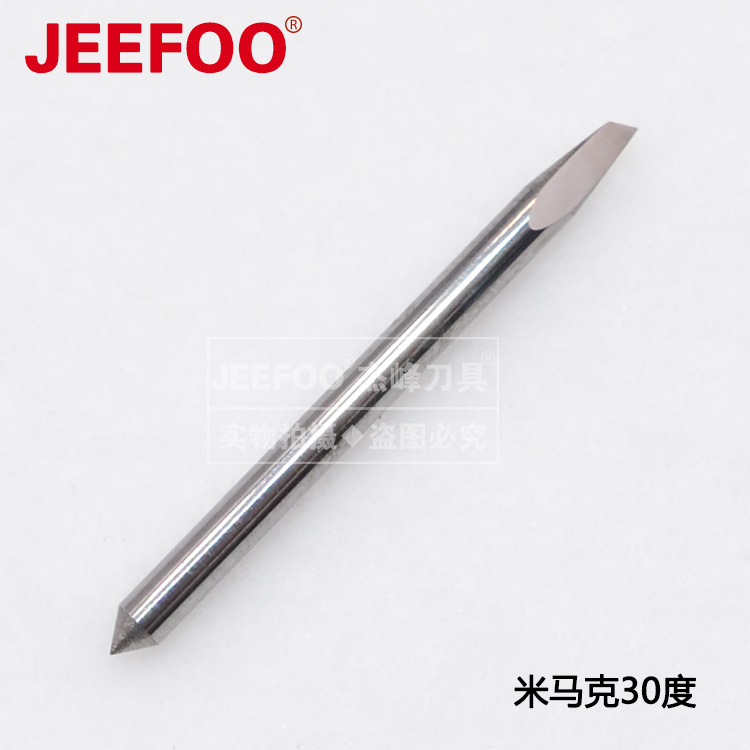
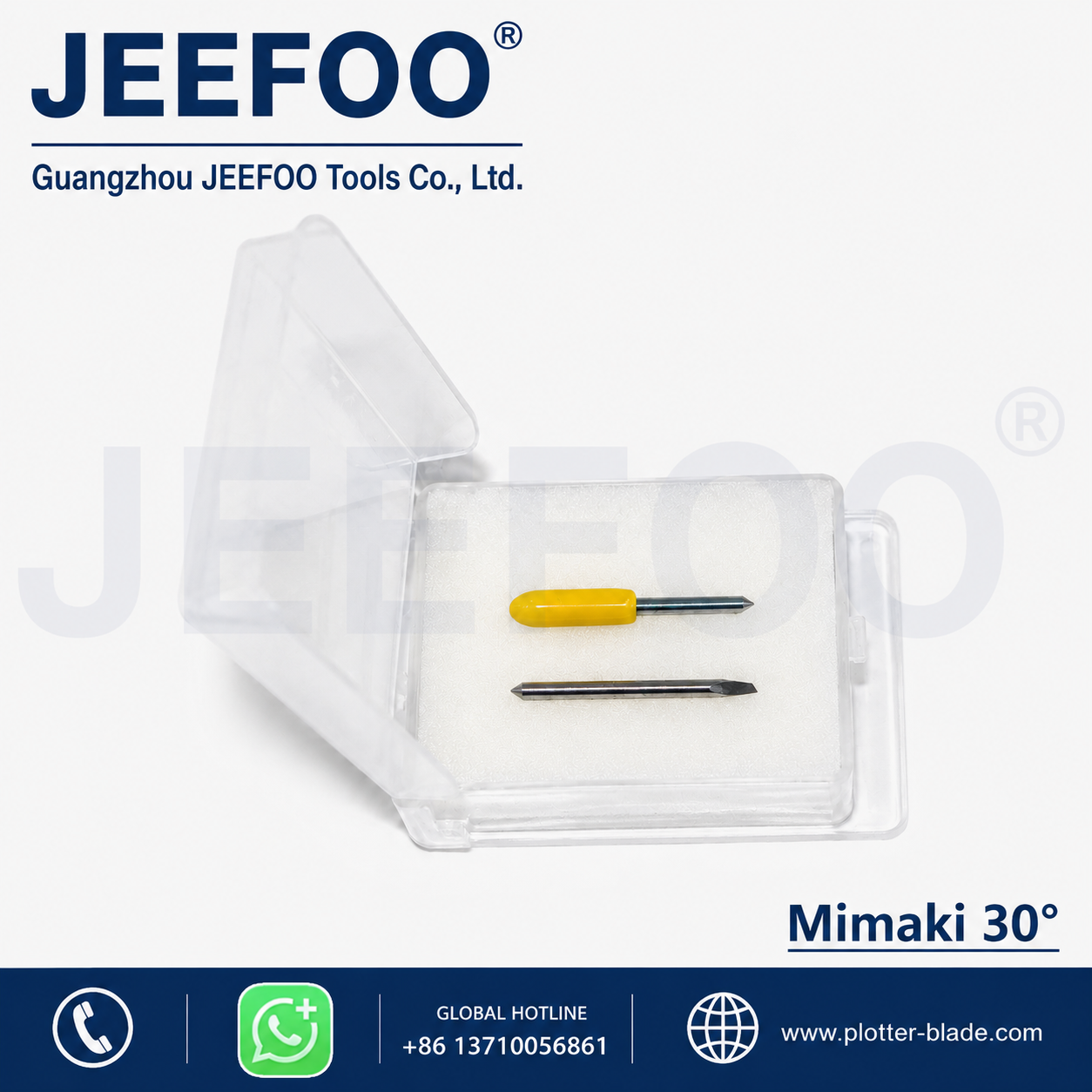
Quick answer: A carbide 3D carving knife is a pointed or tapered rotary cutting tool used for three-dimensional corner clearing, chamfering and relief engraving. The original listing names compatible acrylic, PVC, MDF and medium-hard wood. Actual suitability depends on included angle, tip size, cutting-edge width, flute geometry, carbide grade, spindle and material.

Contents
What is a carbide 3D carving knife used for?
The tool can remove material from internal corners, cut chamfers and follow 3D relief toolpaths when its angle and tip match the model. It is often selected where a square end mill cannot reach a narrow V-shaped feature. The required corner form, minimum detail and final surface determine whether the operation should use a pointed carving tool, ball end mill or another cutter.
Carbide 3D carving knife geometry
Record the included angle, tip diameter or radius, usable cutting length, maximum cutting diameter and shank size. Two cutters that look similar may generate different chamfer widths and corner shapes. CAM geometry must describe the actual tool rather than a generic visual approximation.
A wider edge can remove more material per pass but may erase fine detail, increase cutting load or prevent access to a narrow corner. Select width from the smallest internal feature and the material, then verify with simulation and a shallow test.
Why a carbide 3D carving knife needs a flat plane
The original instructions correctly emphasize surface flatness for normal and reverse engraving. A warped sheet or uneven spoilboard changes the effective depth as the tool moves. With a pointed cutter, a small depth change can create a visible width change.
Support the full sheet, clean the table, confirm vacuum or clamp placement and establish the work coordinate from the actual surface. For demanding work, use a suitable surface-mapping or leveling process if the machine and software support it.
Acrylic, PVC, MDF and wood
Material names alone do not guarantee compatibility. Cast and extruded acrylic can cut differently; PVC composition varies; MDF is abrasive and creates fine dust; wood changes with species, grain and moisture. LMT Onsrud’s acrylic routing guide identifies tooling, programming, machine condition and fixturing as major finish factors.
| Material | Main risk | Verify |
|---|---|---|
| Acrylic | Melting, chip rewelding, edge marks | Sharpness, chip evacuation, feed and speed |
| PVC | Heat, burrs and inappropriate dust control | Exact formulation and supplier guidance |
| MDF | Abrasive wear and fine dust | Extraction, edge condition and fire prevention |
| Wood | Tear-out, burning and grain variation | Grain direction, sharpness and workholding |
Seven carbide 3D carving knife setup checks
- Define the feature. Record corner angle, depth, chamfer width, smallest detail and finish.
- Identify the cutter. Verify included angle, tip, cutting width, flute length, shank and grade.
- Model the exact tool. Use the real geometry in CAM and check collision clearance.
- Flatten and secure the work. Inspect the table, spoilboard, clamps or vacuum support.
- Measure runout. Clean the collet and holder and minimize unsupported reach.
- Use supplier data. Start with material-specific speed, feed, depth and chip-control guidance.
- Test and measure. Make a shallow sample and inspect width, depth, chips, heat and finish.
Carbide 3D carving knife troubleshooting
| Symptom | Checks |
|---|---|
| Line width changes | Sheet flatness, spoilboard, Z reference and tool runout |
| Corner remains uncut | Tip size, included angle, tool access and CAM model |
| Acrylic melts | Chip evacuation, sharpness, feed, speed and dwell |
| MDF burns | Edge wear, feed, speed, depth and dust buildup |
| Fine detail disappears | Blade width, tip size, toolpath allowance and deflection |
Read more 3D carving tool guides.
Safety notes
- Use guarding and material-appropriate dust or chip extraction.
- Stop the spindle before touching the cutter or clearing debris.
- Verify that clamps, shank and holder cannot enter the toolpath.
- Never exceed the lowest speed limit in the assembly.
- Stop if vibration, sound, load, heat or chip form changes unexpectedly.
Frequently asked questions
Can a carbide 3D carving knife cut every listed material?
No. The exact geometry and grade must be approved for the actual acrylic, PVC, MDF or wood and machine.
Why does a pointed cutter need a flat surface?
Depth controls the generated line width, so warping can make engraving visibly uneven.
Is the widest blade always fastest?
No. A wide edge may raise load and remove fine features or fail to enter narrow corners.
Can reverse engraving use the same setup?
Only after confirming orientation, surface reference, geometry and required appearance with a sample.
Conclusion
A carbide 3D carving knife should be chosen by modeled geometry, not only by material labels or appearance. Keep the engraving plane flat, verify the smallest feature and run a measured test before production.

发表回复
要发表评论,您必须先登录。