图王 CB15U 刀片是一类适用于 Graphtec 图王刻字机和刻绘机的 1.5 毫米刀杆硬质合金刀片。本页以 30° 刀尖为重点,说明规格、适用材料、装刀、压力设置和维护方法,帮助广告标识、标签与乙烯基薄膜加工用户获得稳定、干净的切割边缘。JEEFOO 位于中国广州(Guangzhou, China),可为国内外客户提供刻字刀片选型与供货支持。
图王 CB15U 刀片快速参数
- 重点型号:CB15U 30° 刻字机刀片
- 可切割材料参考最大厚度:0.25 毫米
- 刀杆直径:1.5 毫米(约 0.06 英寸)
- 刀片总长:23 毫米(约 0.91 英寸)
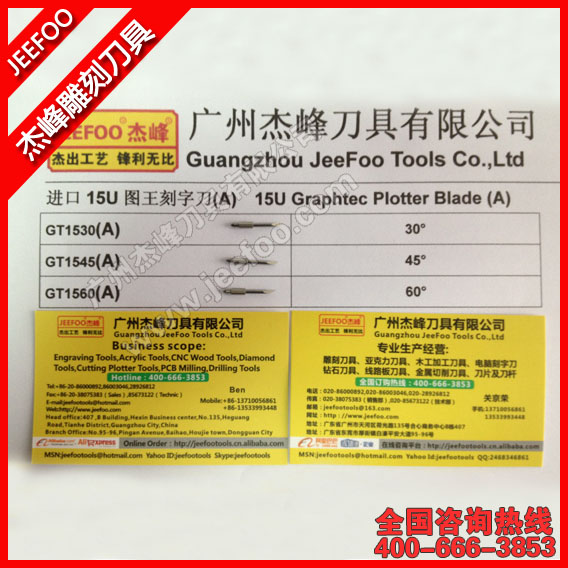
- 可选刀尖角度:30°、45°、60°
- 偏心距:0.25 毫米
- 材质:89%–90% 碳化钨、10%–11% 钴硬质合金
- 洛氏硬度:约 91.5 HRA
- 抗断裂强度:约 4000–4200 N/mm²
- 常规包装:每盒 3 支
1. 30° 刀尖适合哪些材料
30° 图王 CB15U 刀片通常适合较薄的自粘乙烯基、不干胶标签纸、普通广告贴膜和细节较多的文字图形。较小的刀尖角度有利于减少深切,但实际效果仍取决于材料硬度、面材厚度、离型纸、速度与压力。对于厚膜、反光材料或需要更深切入的工件,可结合设备能力评估 45° 或 60° 刀尖。
2. 装刀前必须确认的尺寸
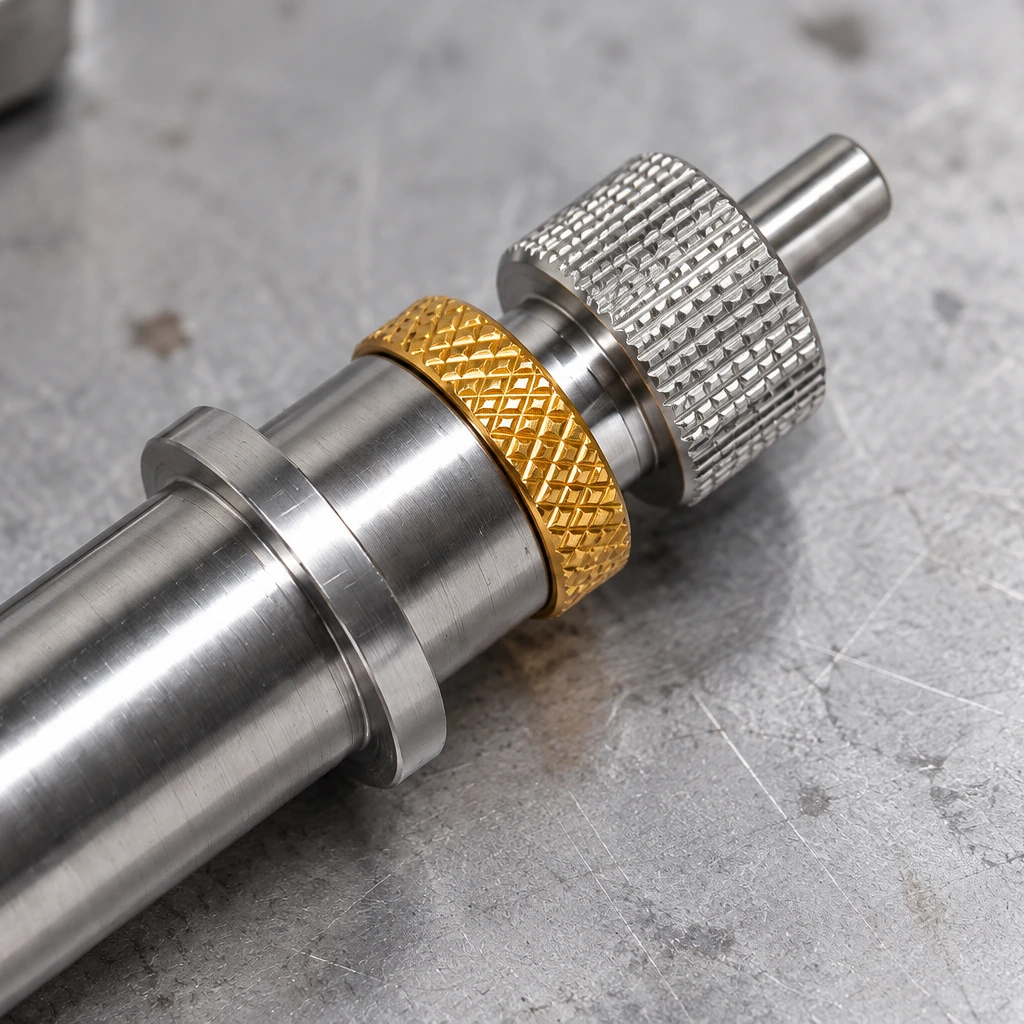
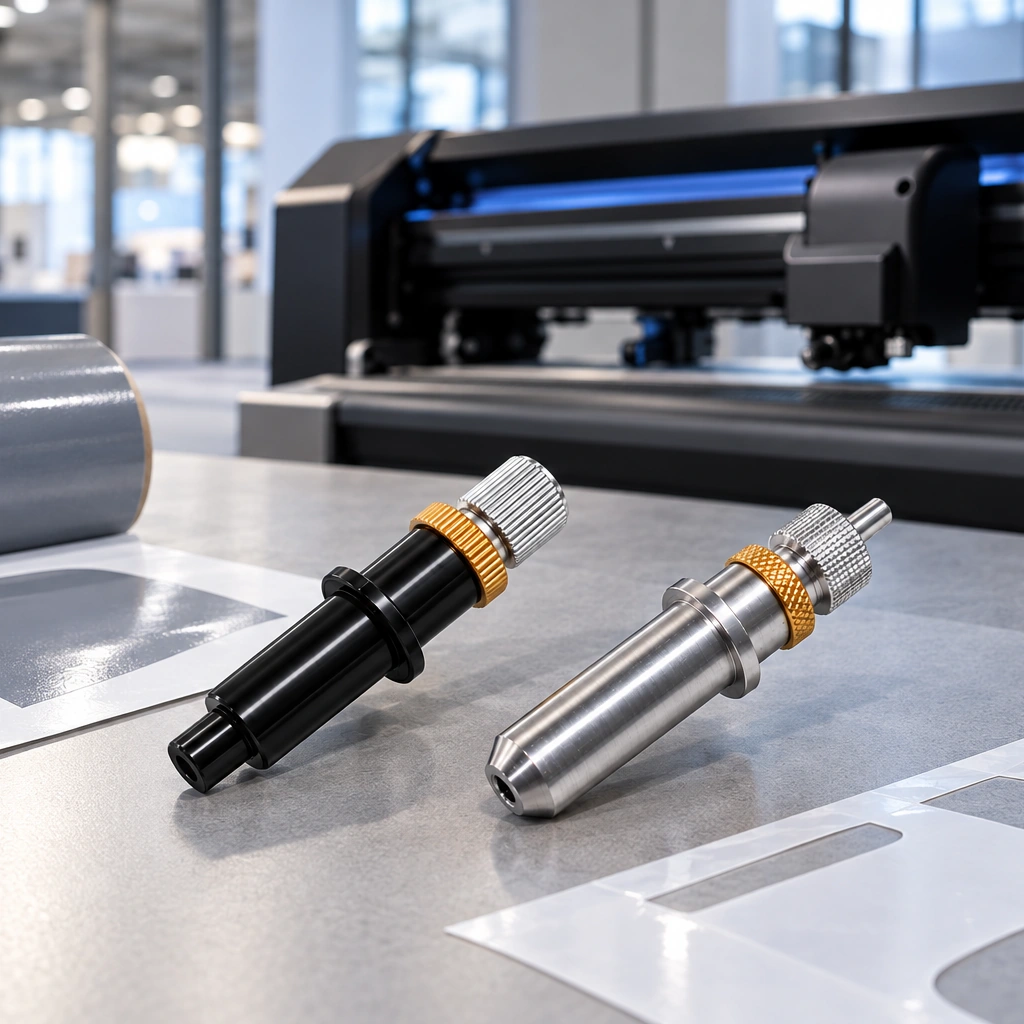
CB15U 刀杆直径为 1.5 毫米,必须配合相同孔径并处于良好状态的刀座。不要把不同柄径刀片强行装入,也不要在夹头松动时继续切割。下单前应核对设备品牌、机型、原刀片柄径、刀座型号和刀尖角度。刀片型号接近并不代表完全通用,错误的柄径或偏心距会造成偏摆、转角变形和深浅不一。
3. 正确设置刀尖伸出量
安装图王 CB15U 刀片时,应让刀尖只露出足以切开面材的微小长度。先用废料手工划切,再在设备上执行测试图形。理想状态是面材完整切开,而底纸仅留下轻微压痕。刀尖伸出过长会放大偏摆、增加断刀风险并缩短寿命;伸出不足则容易出现文字难以剥离或闭合轮廓未切透。
4. 压力、速度和偏心补偿
先使用较低压力和中低速度,再根据测试结果小幅调整。细小文字、尖角和复杂轮廓通常需要更保守的速度。偏心补偿应与 0.25 毫米参考偏心距及设备软件要求匹配;补偿错误可能导致圆形不闭合、直角外凸或内角缺口。更换材料批次后要重新测试,因为表层硬度和底纸厚度可能不同。
5. 硬质合金刀片的使用与维护
钨钴硬质合金兼具耐磨性与刃口保持能力,但刀尖仍怕侧向撞击。取放时避免刀尖碰撞金属表面,清洁刀座内的胶屑和纸屑,并检查刀片是否弯曲。若同一参数下出现毛边、拉膜、转角撕裂或切深波动,应依次检查刀尖磨损、刀座旋转、夹持同心度和压轮状态。
6. JEEFOO 广州供货与应用支持
JEEFOO 在中国广州(Guangzhou, China)供应图王 CB15U 刀片、刻字机刀座及相关切割配件。询价时请提供设备型号、刀座照片、目标材料、厚度、刀尖角度和预计数量。完整的信息有助于确认 30°、45° 或 60° 方案,并降低错配风险。可继续查看 图王 15U 30° 刀片相关产品和 JEEFOO 刀具应用文章;设备维护与型号资料可参考 Graphtec 官方支持页面。
English Guide: Graphtec CB15U Blade Selection and Setup
The Graphtec CB15U blade is a 1.5 mm shank carbide cutting blade designed for compatible Graphtec cutting plotters and blade holders. The 30-degree version is commonly selected for thin self-adhesive vinyl, label stock, masking film, and detailed lettering. Its suitability depends on more than the model name: the holder bore, blade shank, tip angle, offset, material thickness, cutting force, and machine condition must work together. JEEFOO supplies plotter blades and application support from Guangzhou, China, for sign makers, label converters, distributors, and equipment service teams.
Verify dimensions and compatibility
This blade uses a nominal 1.5 mm shank and a total length of 23 mm. The stated maximum material thickness is 0.25 mm for suitable applications, but this is not a universal cutting limit. Coating hardness, adhesive, liner construction, tool holder condition, and machine force all influence the practical result. Confirm the plotter model and holder specification before ordering. A similar-looking blade with a different shank diameter or offset may fit loosely, rotate incorrectly, or produce distorted corners.
Choose the appropriate tip angle
A 30-degree blade exposes less cutting edge and is often suitable for thin films and small graphics. A 45-degree blade is a versatile option for many general vinyl-cutting jobs. A 60-degree blade may help with thicker, tougher, or laminated materials when the equipment and holder are designed for it. A steeper angle is not automatically better: unnecessary penetration increases drag and can damage the release liner. Test the actual production material rather than selecting by thickness alone.
Adjust blade exposure before force
Set the blade so only a tiny portion of the tip extends beyond the holder. Make a manual test cut, then run the plotter’s test pattern at conservative speed and pressure. The face material should separate cleanly while the backing receives only a light impression. If the liner is deeply scored, retract the blade before reducing software force. Excessive exposure magnifies runout, increases side load, lifts small characters, and makes the fragile carbide tip more likely to chip.
Use the correct offset and test pattern
The nominal offset is 0.25 mm. Enter the value required by the machine, blade, and cutting software, then evaluate a pattern containing straight lines, circles, sharp corners, small text, and closed shapes. Rounded outside corners, gaps in circles, or hooks at line endings may indicate incorrect offset, excessive force, a worn tip, or restricted holder rotation. Change one setting at a time and record the combination that works for each material.
Carbide composition and care
The blade specification uses approximately 89–90% tungsten carbide and 10–11% cobalt, with hardness around 91.5 HRA and transverse rupture strength around 4000–4200 N/mm². These properties provide wear resistance and a durable cutting edge, but carbide can still fracture under impact or lateral bending. Keep the tip protected during handling, remove adhesive and paper dust from the holder, and replace blades that are bent, chipped, or unable to produce a clean edge at normal settings.
Troubleshooting inconsistent cuts
If some areas cut deeply while others remain uncut, inspect blade seating, holder bearings, carriage clamping, cutting strip condition, material flatness, and pinch rollers. If small letters lift from the liner, reduce blade exposure and speed before increasing force. If corners are rough, verify offset and blade rotation. When a new Graphtec CB15U blade does not solve the issue, the holder or machine may require maintenance rather than a sharper blade.
For quotation and compatibility review, send JEEFOO the equipment brand and model, a clear holder photograph, the current blade dimensions, target material, desired angle, and order quantity. The Guangzhou team can compare these details with available 30°, 45°, and 60° options. Careful selection and controlled test cutting help reduce wasted vinyl, premature blade wear, production interruptions, and inconsistent finished graphics.
常见问题
CB15U 30° 刀片能切反光膜吗?
部分较薄反光材料可以通过测试确定,但较厚或多层反光膜通常需要重新评估刀尖角度、压力和设备能力。不要直接沿用普通乙烯基参数。
为什么新刀片仍然切不干净?
原因可能是刀尖伸出量、压力、偏心补偿、刀座轴承、切割垫条或材料平整度,而不一定是刀片质量。按上述顺序逐项测试更容易定位问题。