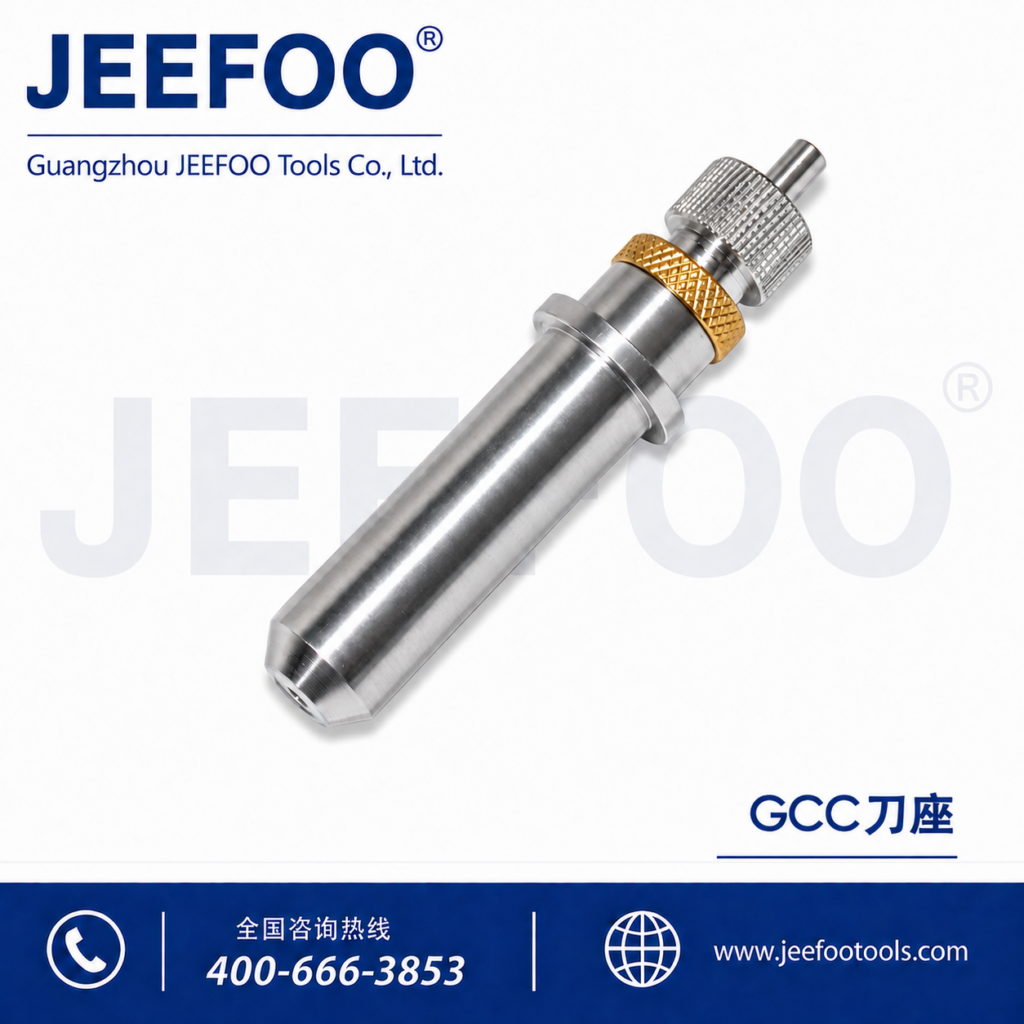
刻字机刀座是绘图切割机、不干胶刻字机和广告材料裁切设备中连接刀片与小车机构的关键部件。刀座的装刀孔径、夹头直径、伸出量调节精度和运行稳定性,会直接影响文字边缘、细线转角、走纸稳定性及刀片寿命。本指南介绍定制刀座的规格、用途与选型要点,并说明 JEEFOO 在广州(Guangzhou, China)提供的适配与定制服务。
刻字机刀座快速参数
- 产品类型:定制款绘图切割机刀座、不干胶切割机通用刀座
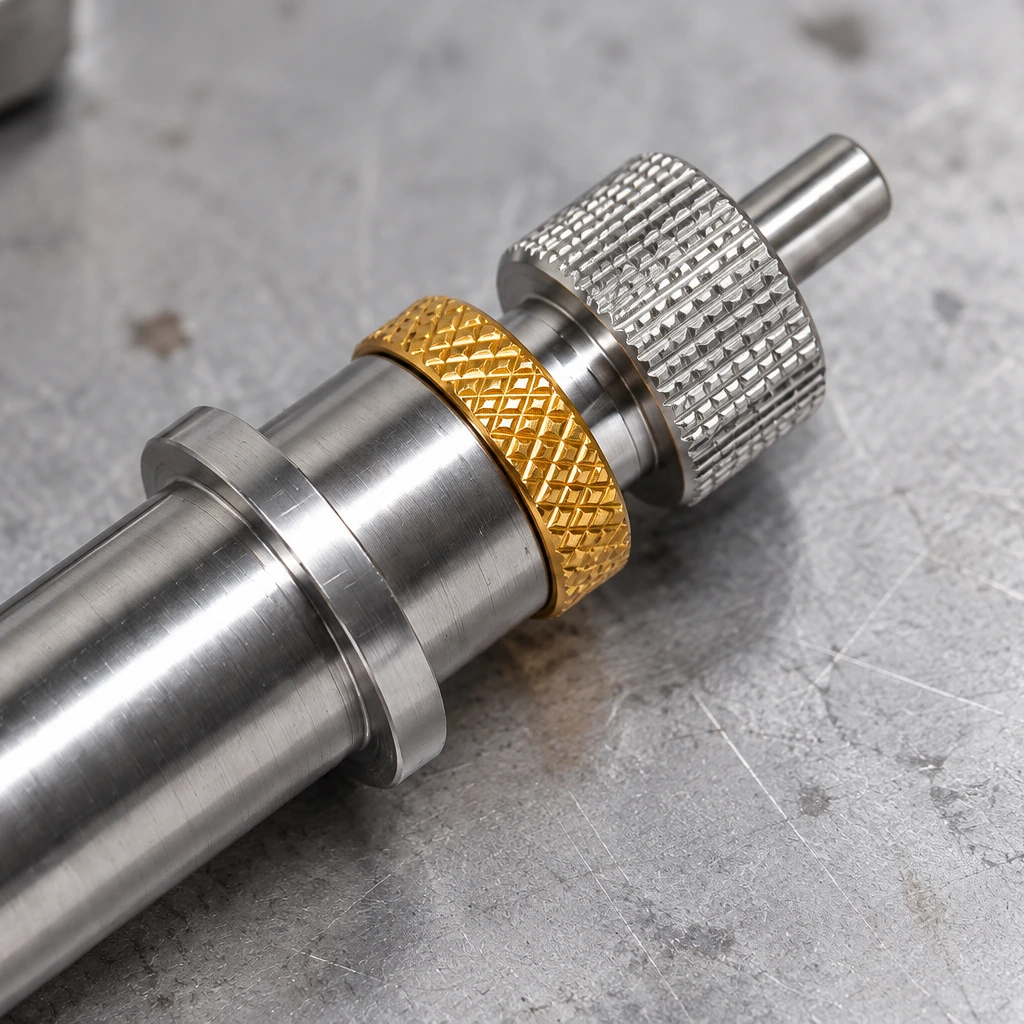
- 刀座高度:31.5 毫米
- 夹头直径:14 毫米
- 装刀孔径:2 毫米
- 适用材料:不干胶、标签纸、广告贴膜、薄卡纸及部分喷绘材料
- 适用场景:刻字、轮廓切割、标签打样和广告标识制作
1. 刻字机刀座的主要用途
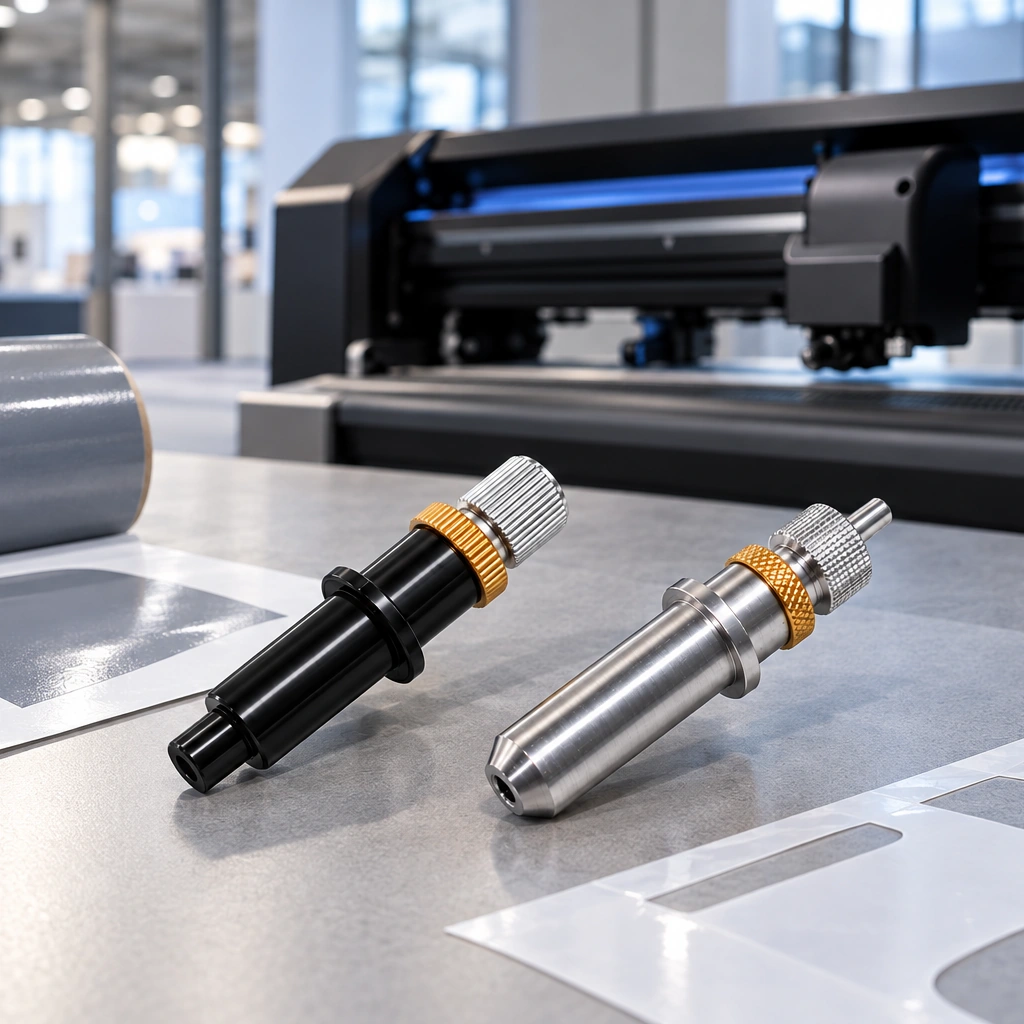
刻字机刀座用于稳定夹持刻字刀片,并通过可调结构控制刀尖伸出量。正确的刀尖伸出量只需略微穿透面材,避免切穿底纸或刮伤工作台。刀座还需要在高速往复运动中保持低跳动,使细小文字、尖角和闭合轮廓保持一致。
对于绘图切割设备,刀座的旋转灵活性会影响拖刀转向;对于不干胶切割机,夹持同心度与高度重复性则直接影响批量标签的一致性。选型时不能只看外观,还要核对接口、刀片柄径、设备小车尺寸和目标材料。
2. 原产品特点
- 适用范围广,可裁切纸张、广告贴膜及部分喷绘材料。
- 切割精度高、运行速度快,走纸与刀尖轨迹稳定。
- 合理调刀后不易损伤材料表面和离型底纸。
- 结构性能不易受温度、湿度和一般粉尘环境影响。
- 运行不易发热,夹持部位防滑耐磨,适合连续作业。
- 支持按设备接口、刀片柄径和安装空间进行定制。
3. 如何确认设备适配
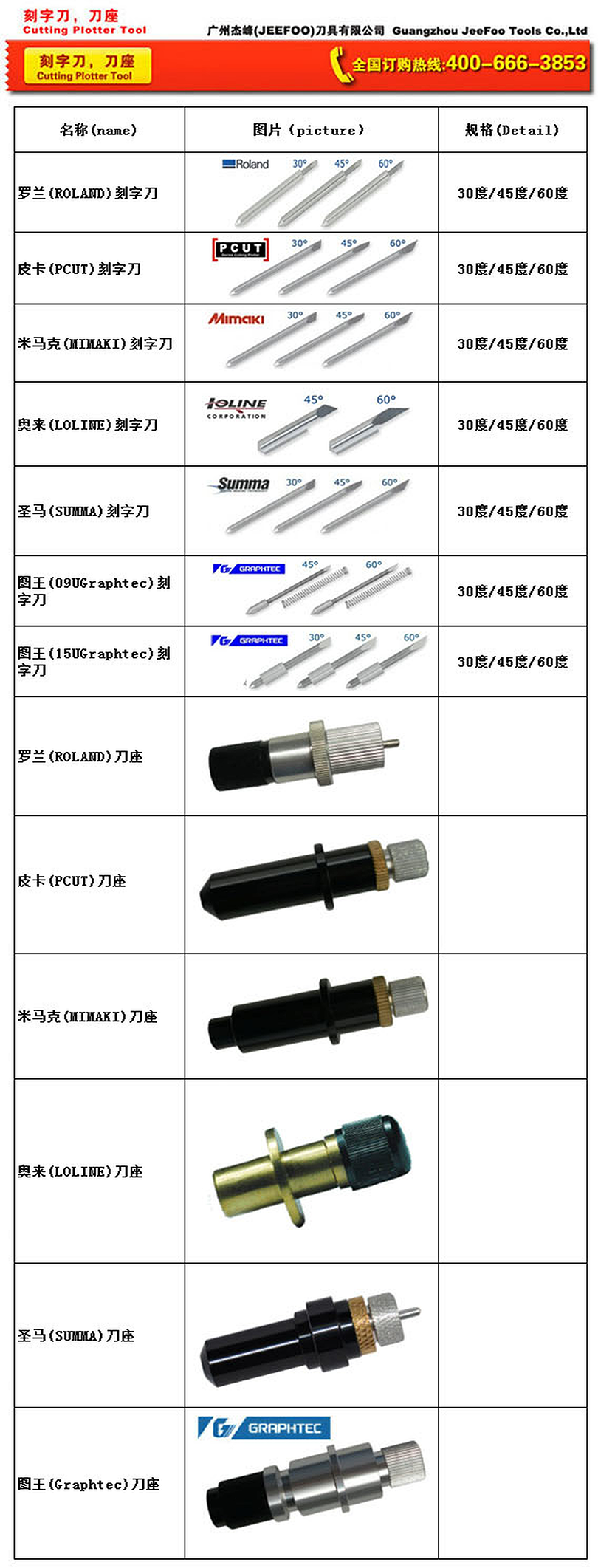
购买刻字机刀座前,建议提供设备品牌、型号、原刀座照片和关键尺寸。重点测量刀座总高度、最大外径、夹持位置直径、装刀孔径及小车锁紧方式。若原配件已经磨损,应尽量参考设备说明书或未磨损样件,避免把磨损尺寸当作标准尺寸。
JEEFOO 可根据绘图切割设备、不干胶切割机及专用自动化平台的安装条件进行评估。对于非标准接口,还需确认行程空间、压紧方向、刀尖中心位置及刀片旋转间隙,确保安装后不会与小车或材料发生干涉。
4. 刀片与装刀孔径
刻字机刀座必须与刀片柄径匹配。本款装刀孔径为 2 毫米,不能把柄径明显不同的刀片强行装入。孔径过大会造成偏摆和夹持不稳,孔径过小则可能损坏刀片或夹头。更换刀片时应清洁孔内碎屑,检查刀柄是否弯曲,并确认锁紧后刀片可以按设计要求转动。
5. 刀尖伸出量与切割压力
调节刻字机刀座时,应先把刀尖伸出量设到较小,再用废料测试。切不透时优先小幅增加压力或伸出量,避免一次调整过多。刀尖露出过长会放大摆动、加快刀尖磨损,还可能切穿底纸;压力过高则会增加刀座轴承和设备小车负荷。
理想状态是刀片能够完整切开面材,同时底纸只留下轻微压痕。不同厚度的标签纸、反光膜、热转印膜和薄卡纸应分别记录参数,批量生产前再次用同批材料确认。
6. 清洁与维护
定期清理刻字机刀座周围的纸屑、胶屑和粉尘,可减少旋转阻力和装刀偏差。不要使用会腐蚀密封件或残留黏性物质的清洁剂。若出现转向不灵、异响、明显间隙或同一图形深浅不一,应检查刀片、夹头和轴承状态,必要时更换刀座。
7. 定制刻字机刀座需要提供的信息
- 设备品牌、型号和小车接口照片。
- 原刀座总高、外径、夹持直径及装刀孔径。
- 使用的刀片型号、柄径和刀尖角度。
- 主要切割材料、厚度及精度要求。
- 预计采购数量和是否需要样品验证。
信息越完整,刻字机刀座的适配判断越准确。对于批量定制,建议先确认样品的安装、旋转、调刀范围和实际切割效果,再锁定后续生产规格。
JEEFOO 广州刀具与刀座供应
JEEFOO 位于中国广州(Guangzhou, China),提供刻字机刀座、刻字刀片、绘图切割机配件及定制适配支持。我们结合设备接口、刀片规格和材料用途评估方案,帮助广告标识、标签加工和工业切割客户获得稳定的夹持与切割表现。
可继续查看 JEEFOO 刻字机刀座产品与刀具应用文章。有关制造与机械安全标准,可参考 ISO 制造业标准页面。联系 JEEFOO 时请发送设备型号、尺寸图和材料信息,广州团队将协助确认合适的刻字机刀座方案。
常见问题
刀座装上后切割深浅不一怎么办?
先检查刀片是否弯曲、刀柄是否完全插入、夹头是否锁紧,再检查材料是否平整及设备压力设置。如果问题随刀座旋转位置变化,可能存在夹持偏心或轴承磨损。
不同品牌刻字机能否通用?
不能只凭外观判断通用。即使外径接近,刀座高度、夹持位置、孔径和锁紧方式也可能不同。下单前应核对尺寸,非标准设备建议提供样件或详细图纸。
English Guide: Choosing a Cutting Plotter Blade Holder
A cutting plotter blade holder is a precision interface between the cutting blade and the moving carriage of a vinyl cutter, label cutter, drawing plotter, or automated converting system. Although the holder is compact, its concentricity, adjustment range, bearing condition, and fit with the machine carriage strongly influence edge quality. A stable holder helps the blade follow tight corners, small lettering, circles, and closed contours without producing uneven depth or torn material. For international buyers searching for a reliable 刻字机刀座, the correct choice should be based on measured dimensions and the intended application rather than appearance alone.
Confirm the critical dimensions before ordering
This customized holder has a nominal overall height of 31.5 mm, a 14 mm collet diameter, and a 2 mm blade mounting bore. These figures are useful reference points, but a successful replacement also depends on the clamping position, carriage locking method, blade centerline, available travel, and surrounding clearance. Measure an unworn original holder whenever possible. If the old part is damaged, compare the dimensions with the equipment manual or a verified sample. Photos of the machine model plate, carriage, original holder, and blade shank help JEEFOO engineers evaluate compatibility before production.
Match the holder to the blade and material
The 2 mm mounting bore must match the blade shank. A loose fit can cause runout, vibration, and inconsistent corners, while forcing an oversized shank into the bore may damage both the collet and blade. The material also matters. Self-adhesive vinyl, label stock, masking film, heat-transfer film, reflective sheet, paper, and thin card each require different blade angles, exposure, speed, and pressure. A clean test cut should penetrate the face material while leaving only a light mark on the release liner. If the backing is cut deeply, reduce blade exposure before relying on lower software pressure.
Set blade exposure and cutting pressure correctly
Begin with the shortest practical blade exposure and test on a small piece of the actual production material. Increase pressure or exposure in small steps. Excessive blade extension magnifies runout, shortens tip life, and may lift small characters from the liner. Excessive pressure adds load to the holder bearing and plotter carriage. Record proven settings for each material type and thickness, but repeat the test when changing suppliers or batches because coating hardness and liner thickness may vary.
Performance checks after installation
After installing the holder, check that it is seated squarely and locked without distortion. Move the carriage through its available travel with the machine powered off when the equipment instructions permit, and confirm that the holder does not contact nearby parts. Then cut a pattern containing straight lines, small text, circles, sharp corners, and repeated shapes. Look for uniform depth, smooth direction changes, complete closure, and easy weeding. If cutting depth changes with the rotational position of the holder, inspect the blade shank, collet concentricity, and bearing condition.
Cleaning and preventive maintenance
Adhesive residue, paper dust, and fine chips can increase rotational resistance or prevent the blade from seating fully. Remove the blade safely, clean the bore and exposed surfaces, and avoid aggressive chemicals that may attack seals or leave sticky residue. Replace a bent blade immediately. A holder should be inspected when it develops abnormal noise, visible play, rough rotation, or repeated depth variation. Routine cleaning is especially important in label and sign shops that process adhesive materials throughout the day.
Custom blade-holder support from Guangzhou, China
JEEFOO supplies cutting plotter blades, holders, and application support from Guangzhou, China. For a custom 刻字机刀座 project, buyers should provide the machine brand and model, dimensional drawings, blade shank diameter, target materials, required accuracy, expected quantity, and clear photographs. For non-standard interfaces, a physical sample can reduce uncertainty. Prototype validation should cover installation, free rotation, adjustment range, repeatability, and real cutting performance before the specification is approved for batch production.
Choosing by verified dimensions and application data helps reduce downtime, premature blade wear, damaged release liners, and inconsistent finished products. JEEFOO’s Guangzhou team can help global distributors, sign makers, label converters, and equipment integrators compare the 31.5 mm height, 14 mm collet diameter, and 2 mm blade bore with their existing system. Send the equipment information and cutting requirements through the JEEFOO product page so the holder and blade combination can be reviewed as one working system.